
Project tree and editor tabs
Move between project files, dashboards, graph windows, traces, logs, and tools in one browser workspace.
Program your CAN-Bus Simulation in Python and operate it from the web browser.

Product
pyCANdo combines Python-based restbus simulation, optimized datalogging, browser dashboards, and flexible Linux hardware deployment for engineering teams.
Write your simulations entirely in Python and move faster on large, complex CAN projects with modern development workflows.
Create optimized trace files for efficient analysis, lower storage requirements, and faster loading of measurement data.
Gain deep insight into your test subjects or control them in real time, then share dashboards as URL links with colleagues.
Select the right performance class for your requirements, from high-performance applications to cost-optimized setups.
Linux service
pyCANdo runs as a CAN bus simulation, datalogger, and interactive browser service on Linux. Engineers keep their workflow in the browser while the connected device handles the lab, bench, or machine interface.
Workbench
The workbench brings project files, graph windows, trace views, dashboards, and controls into a familiar engineering surface.
Move between project files, dashboards, graph windows, traces, logs, and tools in one browser workspace.
Inspect live values, time-series behavior, and CAN traffic while your project is running.
Create browser dashboards for values, controls, and shared views that can be opened from another device.
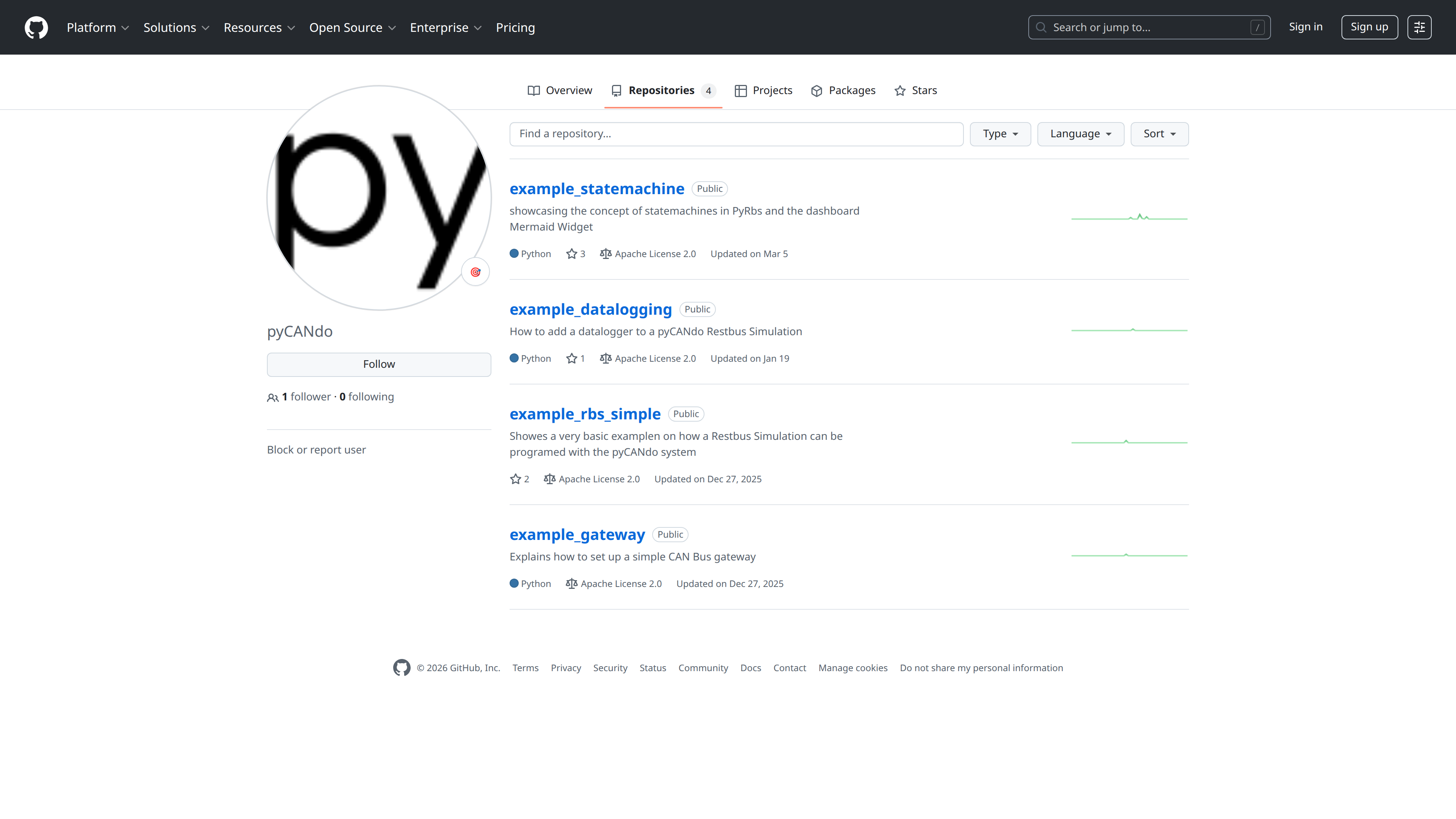
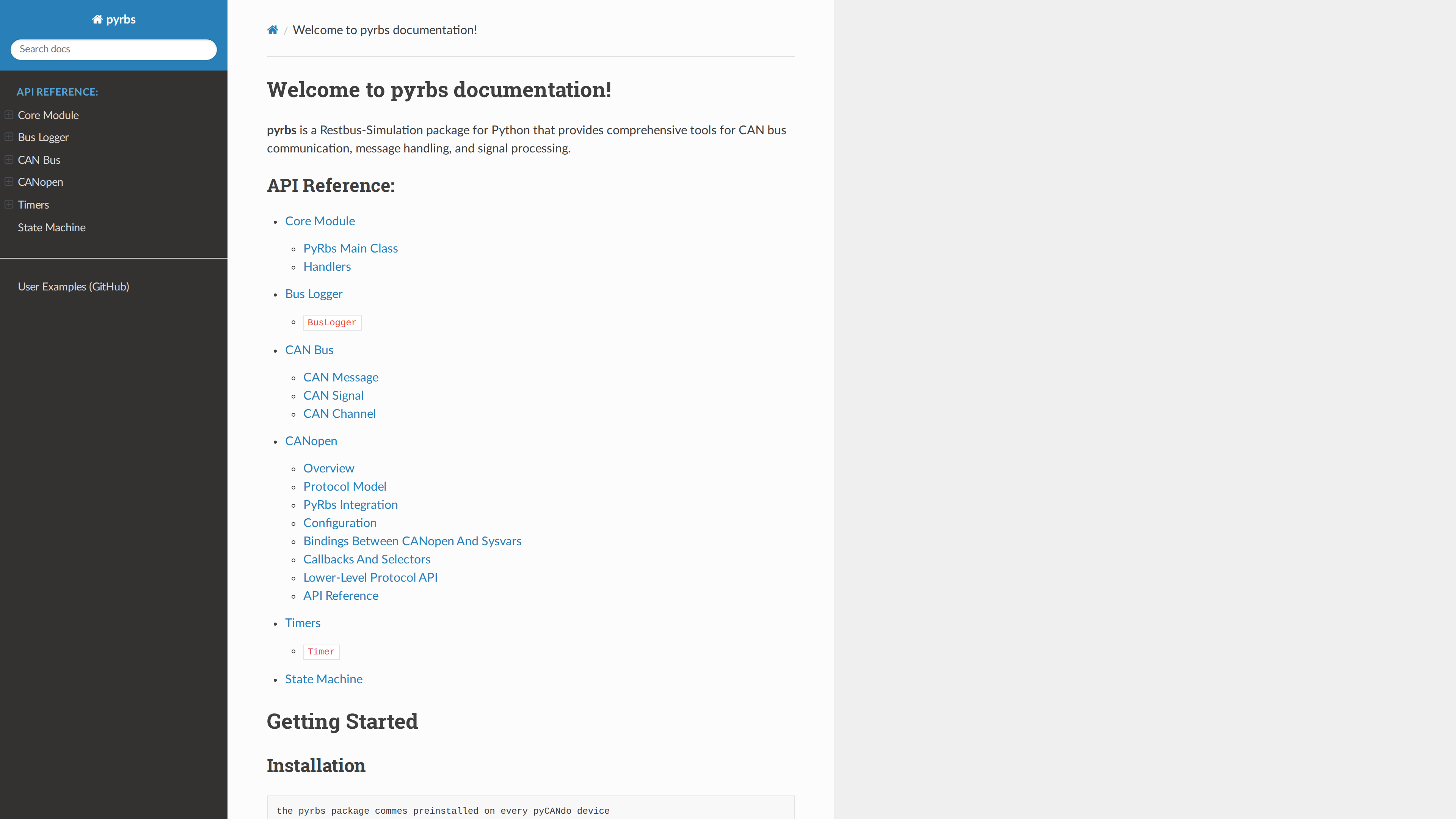
Examples and docs
Download access
After submitting the form, right away you will receive an email with registration details and installation commands for your Linux device.
Share your email address, and some backround only if you like
Download details, evaluation terms, and installation commands are sent to your mailbox.
Use the provided installation flow on the device that should host the pyCANdo service.